
Search Union County Civil Court Records
Union County Civil Court Records are the right place to start when you need a civil file from Maynardville, want to check a docket, or need a certified copy from the clerk. The county makes public records available during regular business hours, and the search can begin online before it moves to the office if a paper file is needed. A party name helps. So does a case number. If you have a hearing date or filing date, that can make the search move faster. The county record trail is local, and that is where the civil search should begin.
Union County Quick Facts
Union County Civil Court Records Access
Union County Civil Court Records are connected to the Tennessee Court Information System portal at tncrtinfo.com/union and the official clerk office at the Union County Circuit Court Clerk. Those are the first official stops for a search. They show how the county routes civil access and where to go if the portal gives you a case number that needs a follow-up at the office.
The county sits in the 8th Judicial District, which includes Campbell, Claiborne, Fentress, Morgan, Scott, and Union counties. That district view is useful, but the local clerk remains the office that keeps the file. For Union County Civil Court Records, Maynardville is the county seat and the place to keep in mind when you are trying to connect the record to the right courthouse.
The official county payment page at Union County online payments is also part of the civil workflow. It gives users a county-backed way to handle certain payments through CourtFeePay. That is practical when a case requires payment before a copy request or another clerk action can move forward.
How To Search Union County Civil Court Records
Start with the portal when you want a quick case check. Union County Civil Court Records may be easier to narrow by party name, case number, hearing date, or filing date than by broad topic. That first pass can tell you whether the matter belongs in Circuit Court, General Sessions Court, or Juvenile Court. It can also tell you whether a local office visit is the better next step.
If the online index is not enough, the clerk office is the next stop. Union County Civil Court Records remain public during regular business hours, so you can ask for help while the office is open. A precise request saves time. It also keeps the staff from searching through a long list of similar names or old filings. The best requests are short and specific.
When you need more context, use the county site and the portal together. The portal helps you spot the case. The clerk helps you confirm the file. That two-step path is often the fastest way to get from a name to an official copy. For Union County Civil Court Records, that is usually the cleanest route.
Union County Civil Court Records And Local Access
Union County Civil Court Records are public documents available during regular business hours, but the access path is still office based. The county clerk keeps the record trail, and the portal helps people see what exists before they travel to the office. That keeps the search practical. It also keeps the request focused on civil material rather than unrelated record types.
The image below comes from the Union County clerk image in the manifest, which is available for the county and fits the civil records setting well. It gives the page a local look without straying from the official clerk and county government sources. The surrounding copy stays centered on Maynardville and the civil access path.
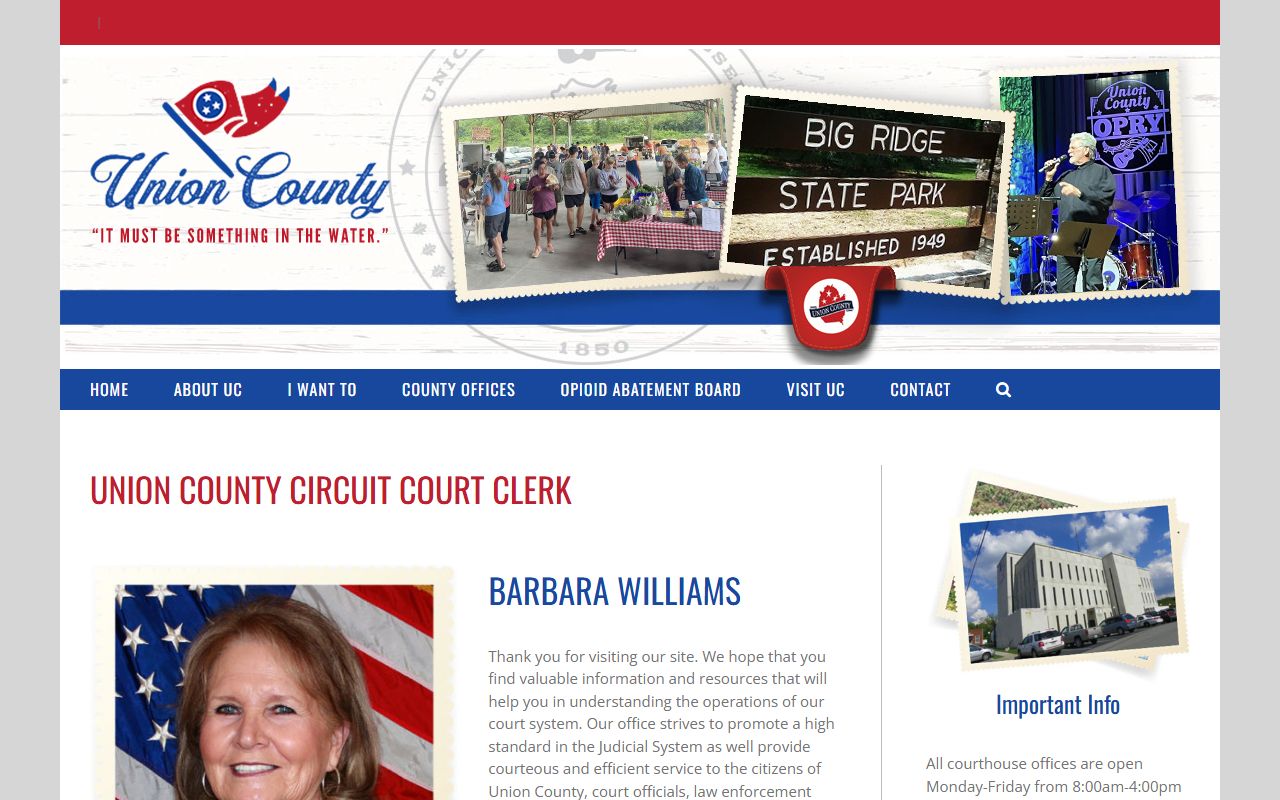
This county image is available in the manifest and works well because Union County Civil Court Records stay tied to the clerk office and the local courthouse setting.
That local visual matters because it matches the real office users contact when they need an official copy. The image does not replace the portal. It simply reinforces the county clerk setting where the file itself is kept.
Union County Civil Court Records Fees
Union County Civil Court Records use the standard Tennessee copy figures listed in the research. Plain copies are 50 cents per page. Certified copies are $5.00 each. The cost stays manageable when the request is narrow, but it can rise if you ask for a large packet or multiple related entries. That is why a clean docket check first is a smart move.
The statewide copy rule at T.C.A. § 8-21-401 explains the general copy structure used by county clerks. Public access is supported by T.C.A. § 10-7-503, yet court files still have limits when a seal or court order applies. The rules work together. They do not erase each other.
If you only need a docket or one order, ask for that first. If you need a certified copy, say so upfront. That helps the clerk process the request with less back and forth. Union County Civil Court Records are easier to handle when the search goal is clear.
Public Access To Union County Civil Court Records
Union County Civil Court Records are generally open to inspection during regular business hours, but the file still lives under court control. Some pages may be limited, and some lines may be redacted. The Tennessee public records FAQ helps explain how local records are inspected and copied. Court records follow those same ideas, with added court rules.
The UT CTAS guide on access to court records explains why courts can keep files open and still limit some materials. That distinction matters. It helps you see why a file may be public yet still require a focused request. Union County Civil Court Records are best approached with that in mind.
That is especially true if you are checking a matter that has several orders or a long docket history. In those cases, the clerk can usually help you choose the right segment to copy. A short request is easier to confirm. It is also cheaper. That combination matters for Union County Civil Court Records.
Nearby Union County Civil Court Records
Union County sits in a district with several nearby counties, so district context can be useful when you are trying to compare clerk offices or understand where a case belongs. The district view helps, but the local file stays with the county office that handled the matter.